Why I shoot Off-Broadway on a Sony
Notes on shooting NYC theater in low light without a flash. Mirrorless silent shutter, lens choices, and why the gear is the boring part.
- theater
- gear
- process
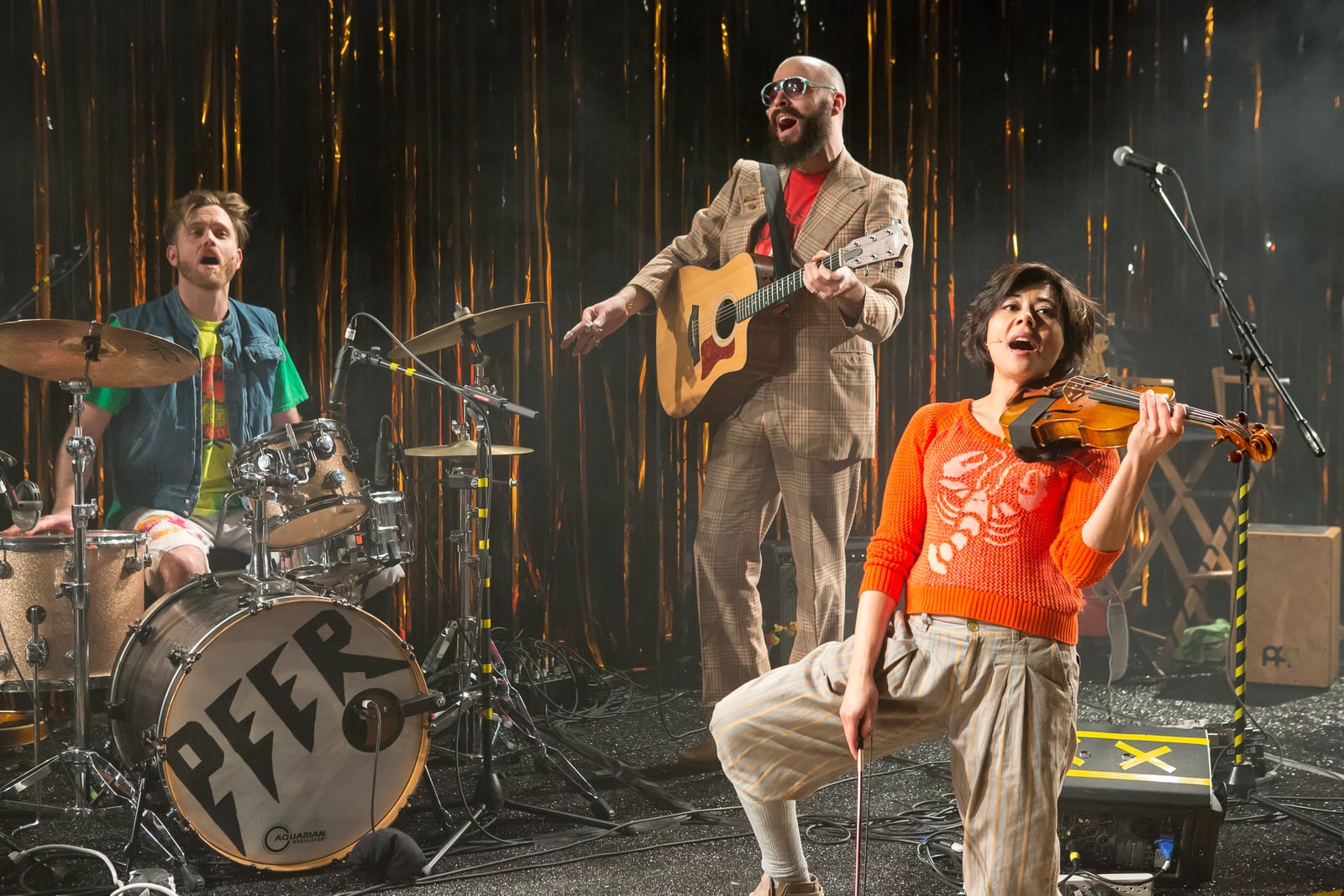
Every few months a producer or stage manager asks what camera I use to shoot Off-Broadway theater in NYC. The honest answer: it does not matter as much as you think.
But I shoot a Sony. So let’s talk about why.
The non-negotiable: silent shutter
Theater photography lives or dies on a silent shutter. Off-Broadway houses seat 75 to 200 people. The audience can hear you. The actors can hear you. A mechanical “clack-clack” three rows back during a quiet two-hander is a hostile act.
Mirrorless cameras solved this problem. A Sony A7-series body in electronic shutter mode is silent. You can shoot a hundred frames during a soliloquy and nobody knows you are working.
This is the entire ballgame. If your photographer is shooting a DSLR with a mechanical shutter at a real performance, they are doing it wrong. Find someone else.
Low light without a flash
The other thing theater demands is performance in low light without a flash. You are working with stage lighting designed for the audience, not for a camera, and you cannot bring your own light.
I shoot wide-aperture primes (35mm, 85mm) and one zoom (24-70 f/2.8) for moments when I cannot move. ISO 3200 is my comfort zone. ISO 6400 is fine. ISO 12,800 if the show calls for it and we are doing color, not a clean black and white.
The Sony sensor handles high ISO well, especially in the shadows where stage photography lives. That matters more than megapixel count, more than frame rate, more than autofocus tracking. (The autofocus tracking is excellent, but a stage actor is not exactly a Formula 1 car.)
Lens choice is the actual creative decision
The body does the boring work. The lens does the looking.
For a typical run-through I bring two prime lenses and one zoom. The 35mm f/1.4 lives on the camera for environmental shots: ensemble pieces, group blocking, scenes where the room is part of the story. The 85mm f/1.4 swaps in for solos, intimate two-handers, anything where the face needs to do the work. The zoom (24-70mm f/2.8) handles a few specific moments where I cannot reposition fast enough between scenes.
Three lenses is more than most photographers use, and more than I would bring to a portrait session. Theater is its own category.
Why I do not care about resolution
Most theater images end up in three places: a press kit at maybe 2400 pixels wide, a poster at 18×24 inches, and Instagram. Every Sony body of the last 5 years has more resolution than any of those need. Buying the latest 60-megapixel body for theater work is a hobby purchase, not a professional one.
The boring truth: a 5-year-old Sony A7 III with good lenses outshoots a brand-new body with kit glass, every time.
What this means for you
If you are hiring a theater photographer in NYC, don’t ask what camera they use. Ask whether they shoot silent. Ask if they have shot in your specific venue or one like it. Ask to see a recent run-through gallery, not a wedding portfolio.
Then look at the work. The pictures are the answer. The gear is a footnote.
If you want a longer breakdown of what to look for in a hire, see how to hire a theater photographer in NYC.